Before your garage door can be installed, it’s essential that the noggins are installed correctly…
How to Fix a Squeaky Garage Door
Any noise a garage door makes can be irritating, and squeaking is one of the most common complaints. A squeaky garage door indicates something in its mechanics isn’t quite right, which can lead to damage, expensive repairs, and severe injuries if not addressed. However, the good news is a squeaky garage door is typically a quick and simple fix.
This article explores the causes of squeaky garage doors and potential fixes for them. For personalised advice, contact our team at PDS Garage Doors today.
What Causes Squeaky Garage Doors?
If your garage door squeaks when you open and close it, it could be due to:
- Loose hardware like worn-out rollers, hinges, chains, nuts, and bolts
- Components that need lubrication, like dry or rusty rollers or tracks
- Loose chains
- Dry or faulty springs
- Misaligned tracks
- Temperature changes that cause metal components to expand and contract
Why You Shouldn’t Ignore a Squeaky Garage Door
A squeaky garage door is more than just annoying– it can become a much larger, and more expensive, problem if not addressed.
What may seem like a minor inconvenience can actually be a safety hazard. If worn-out springs or misaligned tracks are causing the noise, these can cause the door to malfunction.
Malfunctioning garage doors can be a serious hazard, as a garage door under stress can fail by slamming shut unexpectedly, causing injury to anybody underneath or near it. Meanwhile, worn-out springs can snap, and in some cases snap violently, potentially sending metal flying and causing harm to nearby people and property.
Squeaking also indicates friction, which wears garage door parts out faster. If you don’t address these problems in a timely manner, they can turn into expensive repairs.
How to Fix a Squeaky Garage Door
A squeaky garage door is annoying for you every time you open and close it, but depending on how loud it is and how close your neighbours are, it can be annoying for others, too!
Some at-home fixes you can try include:
1. Lubricate Moving Parts
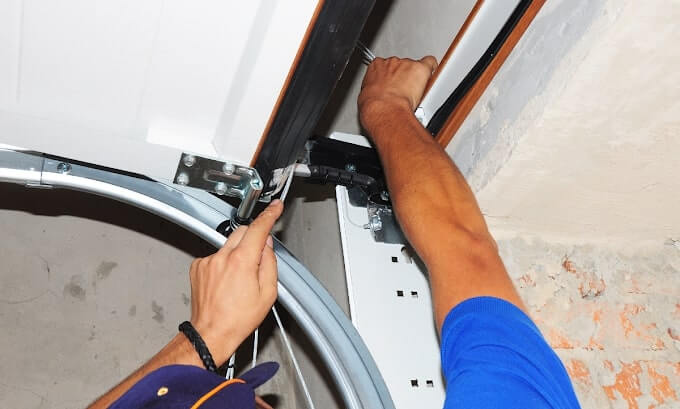
In most cases, the squeakiness you hear is coming from the hardware and components rather than the garage door itself. To lubricate dry, rusty parts, always use a lithium or silicone-based grease– don’t use oil.
Once you have the correct lubricant, follow these steps:
- Ensure the garage door is closed
- Disconnect the garage door from its motor, if it has one
- Spray the moving components while you move the door song the track
- Lubricate the rollers– if you have metal rollers with ball bearings, these always need to be lubricated, while plastic rollers don’t have ball bearings and generally need replacing after several years
- Grease the ball bearings with the rollers on the door track– though you won’t need to if you have seal-bearing rollers
- Check the pulleys and grease them if necessary, checking afterwards to see if they move properly
- Lubricate the top of the rail where the trolley moves, spraying only the top of the rail and not the bottom
- Grease the bearing plates
Be careful when greasing the chain, as the protective coating on garage door opener chains is designed to last the life of the motor. If you notice an issue with the chain, spray a cloth with WD40 and use that to wipe it down.
2. Tighten Nuts and Bolts
Sometimes, loose hardware like nuts and bolts can be responsible for a squeaky garage door. Check components like these and tighten them as needed, being careful not to over-tighten them.
3. Inspect Rollers
Metal rollers can become squeaky, so if you have metal rollers, consider replacing them with nylon. Nylon rollers don’t need lubricating, are quieter, and are typically easier to maintain.
Contact PDS Garage Doors Today
Your garage door should always be in good working order, including being free of noises that irritate you and can be potential hazards. If your garage door is squeaking and continues to do so after following DIY tips, it may be time to call in the professionals.
At PDS Garage Doors, we inspect your garage doors to determine the cause of the problem and work with you to provide the most appropriate solution. To get started, contact us today!

Related Posts


This Post Has 0 Comments